Select an image or table to view it at full size in a new tab.
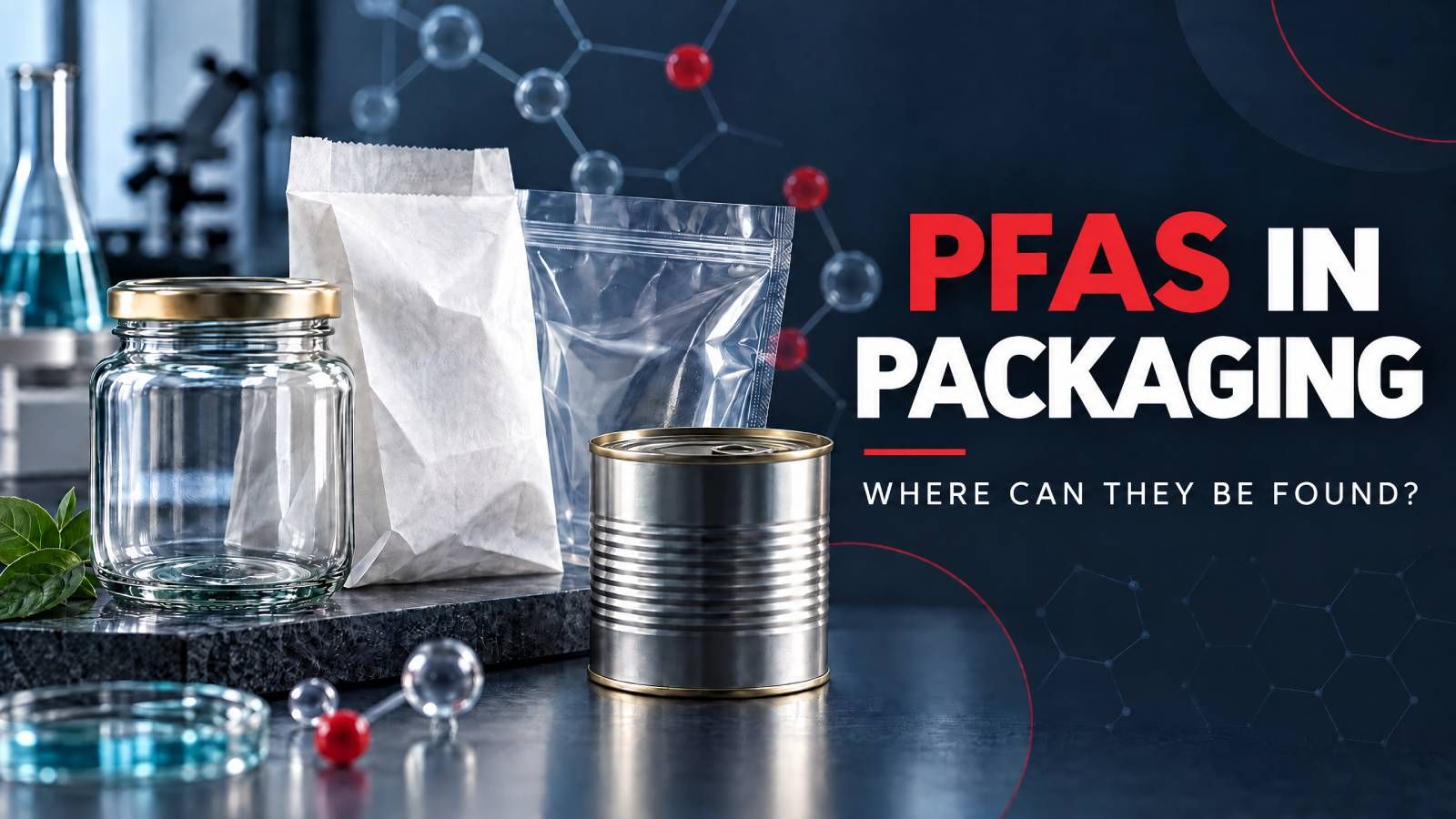
Since PPWR (EU Regulation 2025/40) became mandatory, there seems to be even more misunderstanding of the topic, both among companies and stakeholders. Despite the guidance and interpretations, we encounter (at times) rigid positions without a deeper understanding of the subject. This concerns the evidence required for the limits of certain components, such as PFAS or BPA.
PPWR does not require random PFAS testing of every item of packaging. From 12 August 2026, it introduces concentration limits for packaging intended for contact with food and requires technical documentation. The correct approach is a risk assessment by material, layer, component and intended use — not a universal requirement for “PFAS testing for everything”. The same applies to BPA (bisphenols), yet it seems “easier” for everyone not to address the topic and simply request testing. Certainly, testing is a good way to ensure that we comply with the limits required by PPWR, but what if a hazard analysis shows that PFAS (and/or BPA) are not expected at all in a particular type of packaging? This is where we arrive at the key point: DO YOU KNOW WHAT PFAS ARE, AND WHERE AND WHY THEY MAY BE FOUND?
What are PFAS?
PFAS is an abbreviation for per- and polyfluoroalkyl substances. They are a large group of synthetic chemicals with very stable carbon–fluorine bonds. Consequently, they are resistant to water and moisture, fats and oils, stains, high temperatures and environmental degradation. Because of their persistence, they are often referred to as “forever chemicals”.
PFAS are organic, or more precisely organofluorine, compounds. For a substance to be a PFAS, it must contain specific carbon–fluorine bonds, in particular –CF₂– or –CF₃ groups.
It is therefore important to make a distinction: an “organic material” is not automatically a PFAS. A PFAS can only be an organic material with a particular fluorinated structure.
Why are they important?
Certain PFAS can persist for a long time in the human body and in the environment. Due to long-term exposure, some of them have been associated with adverse health effects, including effects on the immune system, liver, reproductive health and development. Their use and presence are therefore restricted.
Why have PFAS become a mandatory topic in packaging?
Their ability to repel water, fats and contaminants has made them functional in certain coatings, papers, barrier layers and packaging components. The same set of properties is also the reason why PFAS are difficult to degrade and may pose a problem for human health and the environment. PPWR therefore restricts PFAS in food-contact packaging.
However, PFAS are not an “ingredient in every package”, nor does every material carry the same risk. The risk is most often linked to the function performed by a particular layer or component — especially the repulsion of grease, water and stains — rather than merely to the name of the base material.
What PPWR actually prescribes — and what it does not prescribe
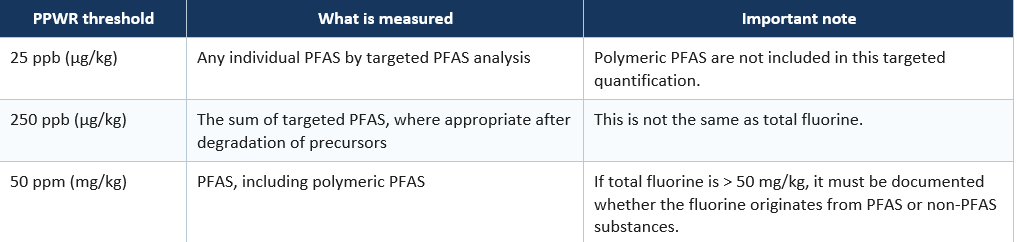
Article 5(5) of Regulation (EU) 2025/40 provides that, from 12 August 2026, food-contact packaging containing PFAS at or above the specified thresholds may not be placed on the EU market. The limits do not apply to “all packaging” without distinction, but to food-contact packaging — packaging intended to come into contact with food, already in contact with food, or which can reasonably be expected to transfer its constituents to food.
Unlike the PFAS restrictions, the sum of concentrations of lead, cadmium, mercury and hexavalent chromium of up to 100 mg/kg in Article 5(4) of PPWR applies to packaging or packaging components generally. This is important: the requirement for heavy metals and the requirement for PFAS do not have the same scope.
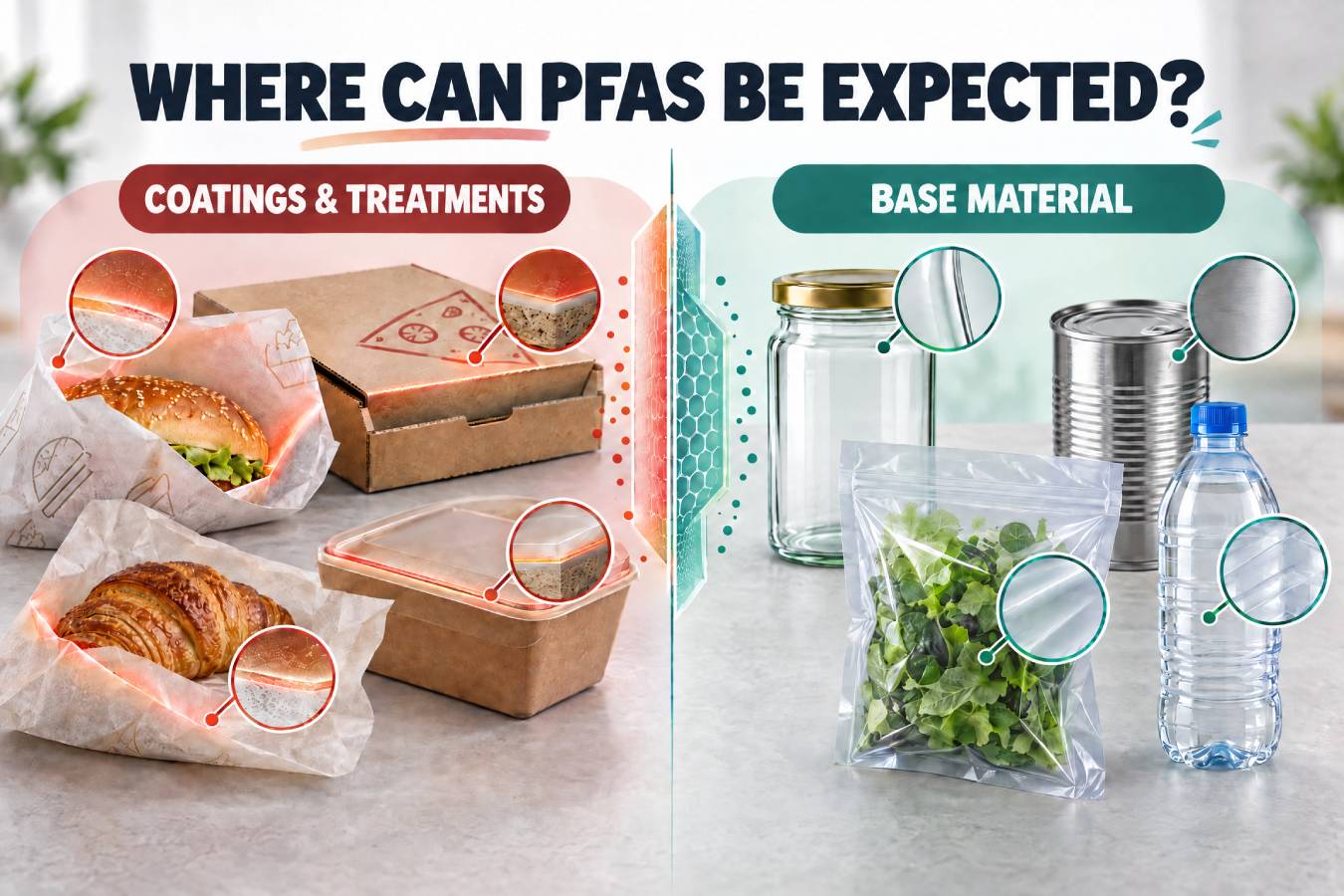
Where PFAS may actually be found: look at the function, not only the material
The greatest likelihood is not necessarily where packaging is “plastic”, but where the material is required to repel grease, water and stains while remaining thin and functional. This is particularly relevant for certain types of paper and board intended for direct contact with fatty or moist food.
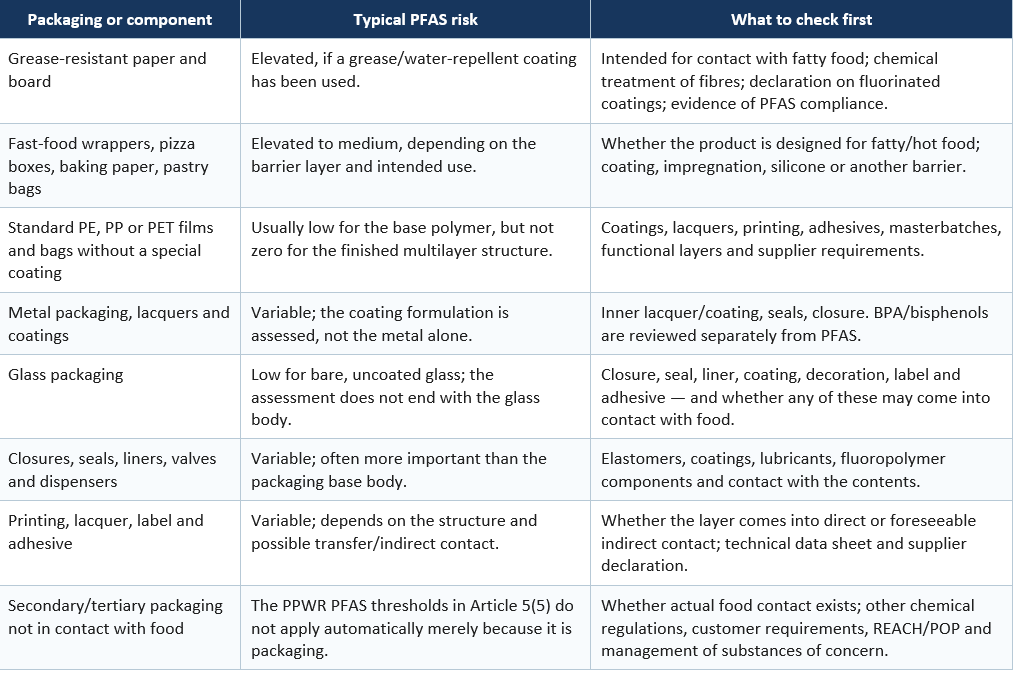
The European Commission lists takeaway food containers, fast-food wrappers, microwave popcorn bags, bakery paper and pizza boxes as typical examples of packaging in which PFAS have been used. OECD further explains the historical use of PFAS in paper and board as functional treatments for the repulsion of grease, stains and water.
Glass: why the question is not “should glass be tested?”, but “which part of the system are we assessing?”
Bare packaging glass is a silicate, inorganic material, and PFAS are not a customary functional constituent of its basic composition. Therefore, requiring that every empty glass jar be automatically sent for PFAS testing often does not address the actual risk and may yield low-value evidence — in other words, meaningless?!
However, final food packaging is not only the glass part. A jar with a screw cap involves at least two systems: glass and the closure. For the closure, the metal, inner lacquer, seal or liner, possible coatings, lubricants and components that come into contact with food are assessed. For glass with a coating or special surface treatment, it is precisely that coating that is assessed; it must not be assumed that analysis of “bare glass” is evidence for the finished packaging.
IMPORTANT ON LABORATORY METHODS
The European Commission explicitly states that no harmonised EU-level methodology exists for PFAS in food-contact packaging. Therefore, it is not a professional requirement simply to say: “carry out an accredited PFAS analysis on glass”. Before a sample is sent, the laboratory must confirm in writing that its accreditation scope and method are suitable for that specific matrix: bare glass, coated glass, closure, seal or complete packaging.
This does not mean that PFAS in packaging cannot be tested. It means that the evidence must be designed for the actual sample and the question at hand. A laboratory may use an accredited scope for a particular method and matrix or a validated in-house method, but the report must clearly state the sample, preparation, parameters measured, limits of quantification and limitations of the conclusion. For bare glass, a method used for paper, plastic, water or soil should not be transferred automatically.
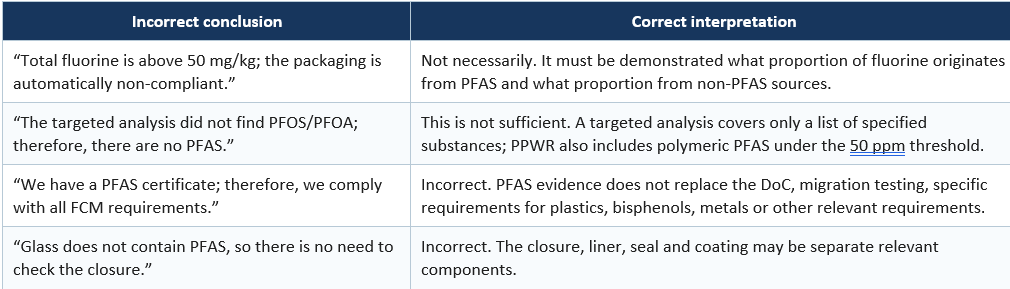
One “total fluorine” result is not the same as the answer “PFAS are present”
Total fluorine (TF) is a useful screening parameter, but it measures fluorine regardless of its source. Therefore, elevated total fluorine alone does not demonstrate the presence of PFAS as defined by PPWR. It may indicate the need for further clarification, but organic fluorine and non-PFAS sources of fluorine must be distinguished.
The Commission guidance recommends a stepwise approach for surveillance: first total fluorine; then, where results exceed 50 mg/kg, verification of whether fluorine is organic or inorganic; followed by analysis to verify the individual and aggregate thresholds. The guidance also states that this is a recommended approach based on available analytical capacities, precisely because no EU-harmonised methodology for PFAS in food-contact packaging exists.
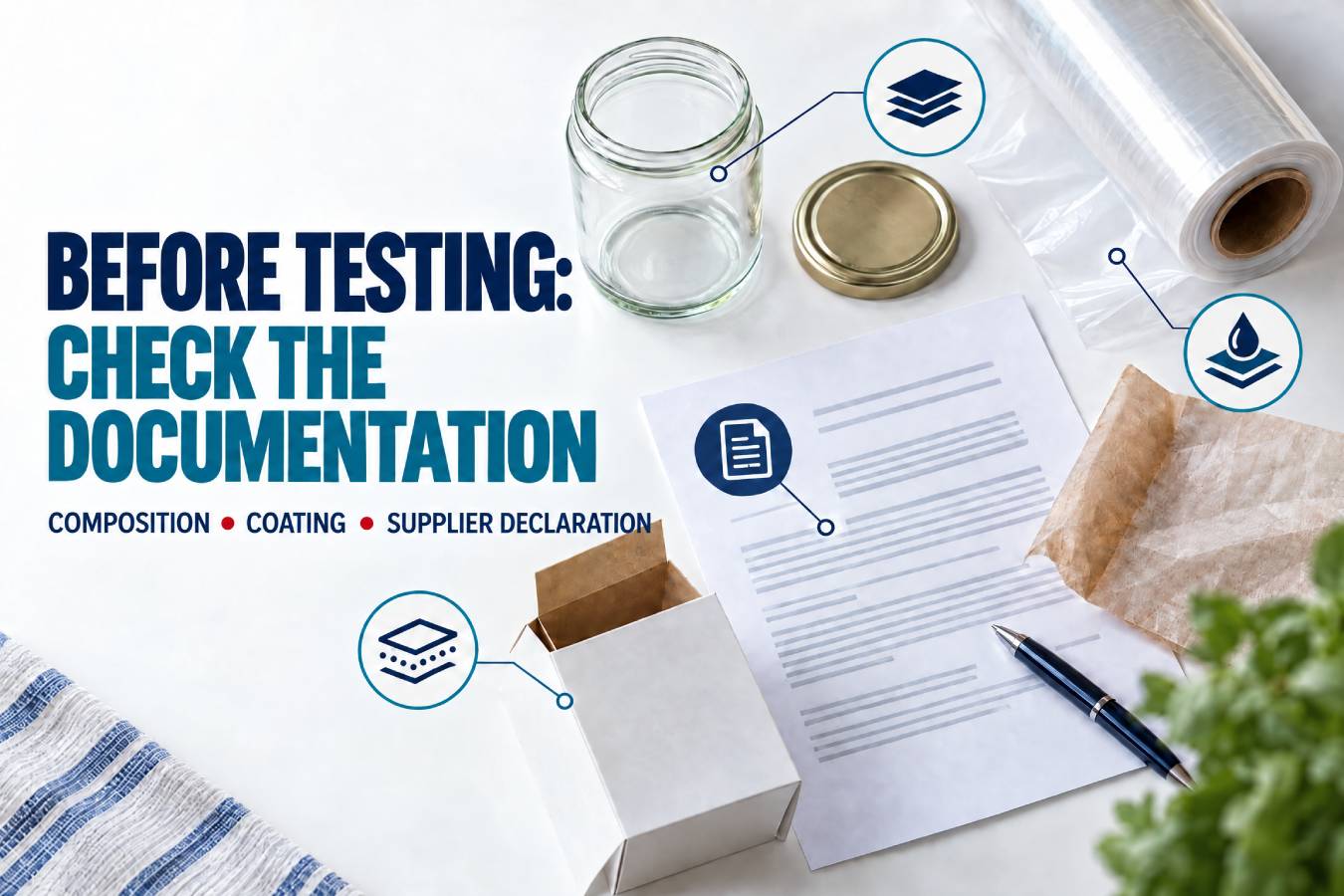
Practical decision model: documentation before the laboratory, laboratory testing when documentation does not close the risk
The most effective system does not begin by ordering a broad panel for every material. It begins by mapping the packaging down to component level and establishing the intended food contact. Only then is the evidence selected.
1. Separate packaging into components: base body, inner layer, coating, closure, seal, label, adhesive and printing. Do not request documentation only for a “jar”, “can” or “film”.
2. Establish the food contact: direct, indirect/foreseeable or no contact. The PPWR PFAS thresholds in Article 5(5) target food-contact packaging.
3. Request information on function: whether a grease/water-repellent treatment, fluorinated coating, fluoropolymer, special seal or surface process treatment has been used.
4. Assess the risk. For uncoated glass without fluorinated treatments, the initial evidence is usually documentation on composition and components. For grease-resistant paper, a coated surface or a component with an unknown formulation, request more detailed evidence and, where necessary, testing.
5. If testing is needed, state in the laboratory order the components, end use, food type, contact conditions and relevant PPWR thresholds. Request confirmation of the accreditation scope/method for the specific matrix.
6. Compile a technical dossier: specifications, DoC where applicable, supplier declarations, formulations or confirmations of the absence of PFAS, the risk assessment, laboratory reports and the compliance conclusion.
What exactly to request from suppliers
Packaging suppliers should not be asked only for a generic “PFAS free” statement. Such a sentence, without identification of the product, component, definition, date and basis, does not resolve the risk. The request should be linked to the specific item and its intended use.
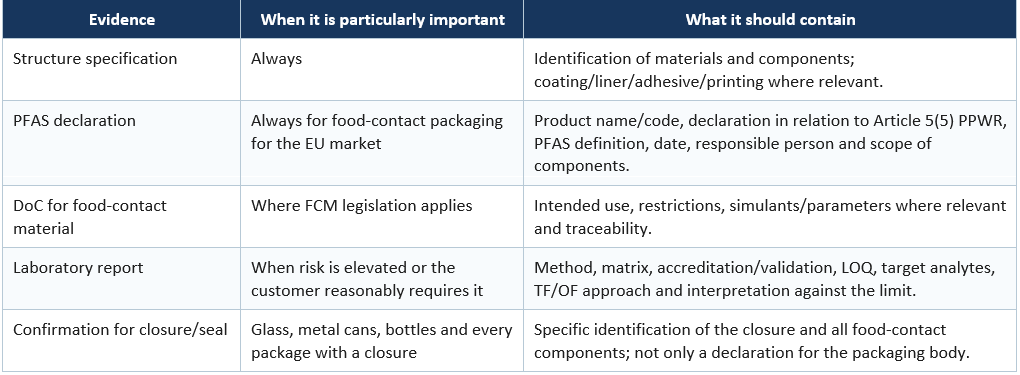
Four common mistakes that create cost without better evidence
The first mistake is submitting a sample under the general name “packaging”. Such a request does not tell the laboratory what is actually being tested.
The second is conflating PFAS with bisphenols or heavy metals.
The third is treating total fluorine as the final judgment on PFAS.
The fourth is accepting an unspecified supplier declaration that does not state the product code, component, intended use, date and responsible person.
A well-designed system is smaller, clearer and more defensible: first identify the actual risk, then collect the appropriate evidence, and direct testing to where it can answer the regulatory question. This is better than a policy of “test everything” — and better than a policy of “ask nothing”.
If we simply send packaging for laboratory testing so that customers will no longer “bother us with requests” (while paying for very expensive tests that may not even be necessary), what then is the purpose of Regulations, standard requirements and risk analyses?! Should we merely complete a form on the basis that “paper can take anything”, or should we actually find the point, which is to ensure that the product is safe and reduce the risk to consumers’ health?
It is only necessary to read the guidance and interpretations already available at the following links:
1. Regulation (EU) 2025/40 on packaging and packaging waste (PPWR), in particular Article 5(4)–(6) and recitals 20–25. https://eur-lex.europa.eu/eli/reg/2025/40/oj/eng
2. European Commission, Guidance document for Regulation (EU) 2025/40 on Packaging and Packaging Waste, section on enforcement of the PFAS restrictions. https://eur-lex.europa.eu/legal-content/EN/TXT/?uri=PI_COM%3AC%282026%293702
3. OECD, PFASs and alternatives in food packaging (paper and paperboard): report on commercial availability and current uses. https://www.oecd.org/content/dam/oecd/en/publications/reports/2020/09/pfass-and-alternatives-in-food-packaging-paper-and-paperboard-report-on-the-commercial-availability-and-current-uses_e2df38c9/6db0c033-en.pdf
4. Regulation (EC) No 1935/2004 on materials and articles intended to come into contact with food, in particular Articles 1 and 3. https://eur-lex.europa.eu/eli/reg/2004/1935/oj/eng