
Select an image or table to view it at full size in a new tab.
What is the most important factor in ensuring food is safe for consumption? Certainly, prevention: prevention in terms of the facilities where food is produced, the establishment (and proper implementation) of prerequisite programs, and finally, the application of HACCP principles. Once procedures are established, verification activities are used to confirm compliance with the requirements of laws, standards, customer expectations, and internal rules. One of the (perhaps the most important) verification activities for confirming that food is high-quality, safe for human consumption, and authentic is (laboratory) analysis. Through established sampling plans based on hazard analysis, the company confirms whether or not the set limits are being met.
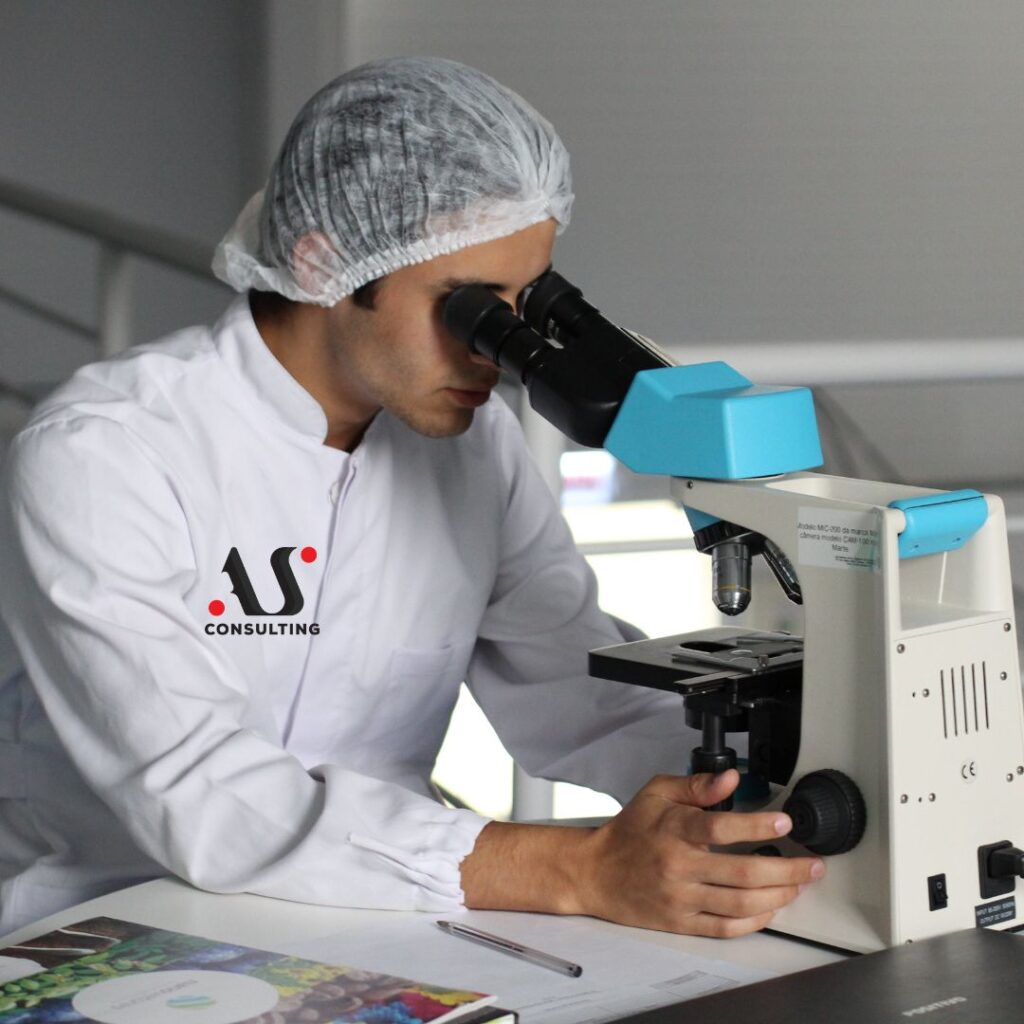
In addition to the analyses used to confirm product quality, safety, and authenticity, companies also analyze the working environment in food production facilities, in order to prevent microbiological cross-contamination of the product from the surroundings.
To ensure the analyses are adequate and that the company knows what and where to analyze, it is necessary to:
- Conduct a risk assessment to determine the scope of the required environmental monitoring program;
- Review legal requirements and customer requirements.
What is an Environmental Monitoring Plan?
An Environmental Monitoring Plan (EMP) is a plan that verifies the effectiveness of all hygiene measures (hygiene practices) in the company and provides necessary information to prevent potential microbiological contamination of products.
According to GFSI Benchmarking Requirements v.2020.1: “A risk-based approach must be applied in order to define the microbiological environmental monitoring program, which must be established, implemented, and maintained to reduce the risk of food contamination.”
Thus, the basis for the plan is hazard analysis. How to develop an adequate plan?
- Form a multidisciplinary team:
A team consisting of qualified personnel from within the organization, with specific knowledge of production processes and equipment, as well as personnel with experience and education in microbiology and food safety. - Conduct hazard analysis:
Identify relevant microbiological hazards, including pathogens, spoilage organisms, and indicator organisms. - Develop the Environmental Monitoring Plan:
Based on the hazard analysis, develop the EMP, including defined criteria and limits, as well as sampling and monitoring locations. - Implement documented procedures that support the environmental monitoring program.
- Implement a training program related to environmental monitoring for all staff involved in carrying out the program.

Potential Microorganisms Subject to Monitoring:
Pathogens:
- Salmonella spp. (commonly present in raw materials of animal origin)
- Listeria monocytogenes (typically found in moist or cold/refrigerated environments and drains)
Spoilage Organisms:
- Yeasts and molds (airborne)
Indicator Organisms:
- Coliforms, E. coli (associated with contaminated water and fecal contamination), Enterobacteriaceae, Aerobic Plate Count, Listeria spp., Pseudomonas spp., etc.
Environmental Monitoring Plan – Risk Zones
The organization must define relevant microbiological hazards specific to the production environment of its products. After that, risk zones for environmental monitoring are defined.
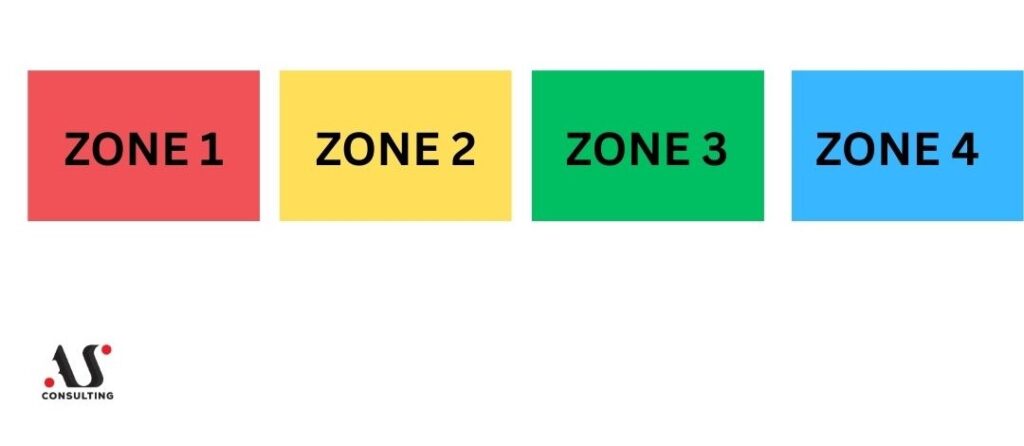
For example, a facility can be divided into four (4) different risk zones:
- Zone 1 – Surfaces in direct contact with food, such as work surfaces, utensils (knives, blades, cutters, and cutting boards).
- Zone 2 – Surfaces that are not in direct contact with food, but are in close proximity to food and food contact surfaces (e.g., equipment frames, cooling units in refrigerators/freezers, ceilings, walls, floors, and drains located near food contact areas).
- Zone 3 – Distant surfaces that are not in contact with food, but are located in or near food processing areas and could potentially lead to contamination of Zones 1 and 2.
- Zone 4 – Remote areas outside the processing area that are not in contact with food, such as handwashing areas, locker rooms, and storage rooms.
DO YOU ALREADY HAVE AN ADEQUATE ENVIRONMENTAL MONITORING PLAN? IF YOU ARE UNSURE HOW TO DEVELOP ONE, FEEL FREE TO CONTACT OUR AGENCY FOR ASSISTANCE!